
Teaching your child Hindi abroad: a parent's guide
By Dr. Ritu Tewari · For Hindi-speaking families living outside India · 7 min read · Updated 4 November 2026 · Reviewed by Vinitha R, Founder & CEO
Whether you live in the US, the UK, the Gulf or Australia, Hindi can stay a living language for your children. Here is how to build speaking at home, teach Devanagari step by step, and keep motivation going.
Start with speaking
Children who hear Hindi every day pick it up naturally. Keep some parts of the day in Hindi, such as meals, bedtime stories and time with grandparents, and answer in Hindi even when your child replies in English.
Devanagari is easier than it looks
Hindi is written in Devanagari, which is largely phonetic: each letter mostly stands for one sound. Children who learn the letters well can soon sound out words. Teach it in this order, a little every day:
- Swar (vowels) and their sounds
- Vyanjan (consonants), a few at a time, with familiar words
- Matras: the vowel signs that attach to consonants, which unlock real reading
- Simple words, then short sentences and picture books
- Conjunct letters, once reading is comfortable
Make it part of family life
Songs, rhymes, festivals and films are the easiest way to grow vocabulary. Read Hindi picture books together, sing the songs you grew up with, and talk about festivals like Diwali and Holi in Hindi as you celebrate them.
Use milestones to keep motivation up
Clear goals help older children stay motivated. The Dakshin Bharat Hindi Prachar Sabha runs a series of nine exams, from Parichaya to Praveen Uttarardh, which give children steady milestones. For school students, Hindi as a school subject in CBSE schools abroad is another reason to keep up reading and writing.
A realistic routine
Short and regular beats long and occasional:
- 10 to 15 minutes of reading or writing on weekdays
- One Hindi story, song or film at the weekend
- A weekly call with relatives where your child speaks only Hindi
When a teacher helps
A teacher adds structure for reading, writing and grammar, and keeps progress steady when family life gets busy. Live one-on-one classes can be timed for your country, whether that means after school in the Gulf or Saturday mornings in the US.
Common challenges, and what helps
A few parts of Hindi trip up most young learners. Knowing them in advance makes them easier to handle.
- Look-alike letters such as ब and व, or घ and ध: practise them side by side
- Matras: children often forget them when writing; say each word slowly while writing it
- Nasal sounds marked with bindu or chandrabindu: listen and repeat with familiar words
- Gender: Hindi nouns are masculine or feminine, and verbs change to match; learn nouns with a simple phrase rather than alone
- Conjunct letters: leave them until simple reading is comfortable
Milestones by stage
Every child is different, but progress often looks like this:
- Starting out: recognises Swar and many Vyanjan, says simple sentences
- Early reader: reads short words with matras, writes their name
- Growing reader: reads picture books aloud, writes short sentences
- Confident: reads stories independently, writes short paragraphs, holds a conversation with relatives
Resources worth having
Hindi picture books and early readers, children's songs and rhymes on video, and audio stories for the car are enough for most families. A notebook for handwriting practice and flashcards of common words help with daily practice.
Questions parents ask
Can my child learn Hindi if only one parent speaks it?
Yes. One parent speaking Hindi consistently, plus books, songs and classes, is enough for many children to become confident.
Should we teach Hindi before or after English reading?
Children can learn both at the same time. Reading skills in one language usually support the other.
What are the Prachar Sabha exams?
A series of nine Hindi exams run by the Dakshin Bharat Hindi Prachar Sabha, from Parichaya to Praveen Uttarardh, which give learners recognised milestones.
My child confuses similar Hindi letters. Is that normal?
Yes. Letters like ब and व look alike to beginners. Practising them side by side, a few minutes a day, clears it up for most children.
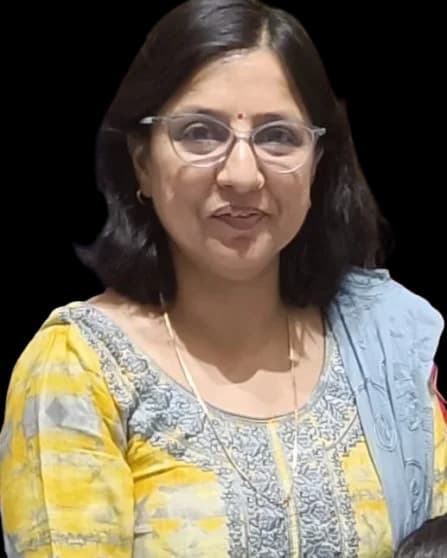
About the author
Dr. Ritu Tewari · Hindi Lead
Doctorate in Hindi
Dr. Tewari leads Hindi at Ed Horizon and specialises in advanced Hindi grammar and literature, teaching senior school students and adults who want to read and write Hindi well.
Reviewed by Vinitha R, Founder & CEO.